Policyholders attorneys often try to skip the threshold steps of bringing their client’s claim within coverage and allocating between covered and non-covered causes of loss. Instead, the policyholder attorney would have the insurer first disprove coverage, or at least first justify its coverage position. These tactics unfold in a familiar way.
The policyholder attorney will engage a consultant to write up an Xactimate estimate. Or, perhaps a public adjuster already wrote up the estimate and then brought the claim to the attorney. Everything that is wrong with the structure will go into the estimate. Every water-stained ceiling tile, bent AC condenser fin, and dent on the siding will go into the estimate regardless of causation. The bigger estimate, the better to create more leverage. Then the policyholder attorney will simply ride that estimate all the way through the case. To save money, the policyholder attorney will often not retain an engineer to give causation opinions regarding the damage. Or, the policyholder attorney may retain an engineer to provide a stock report that is heavy on magic words but short on competent causation opinions. A common issue is trying to overcome a policy’s limitation requiring a storm-created opening. The policyholder attorney will also try to poke holes in the insurer’s investigation of the claim to muddle the issue of causation.
Judge Sim Lake recently examined a case with some of these characteristics in Papa Yolk’s Grill, Inc. v. AmGUARD Ins. Co., 2020 U.S. Dist. LEXIS 66672 (S.D. Tex. April 15, 2020).
Read more ›

 A recent decision from one of New York’s trial courts of general jurisdiction could have a chilling effect on written communications between an insurer and its retained counsel during a claim investigation. In Otsuka America, Inc. v. Crum & Forster Specialty Insurance Co., 2019 WL 4131024, Judge Andrea Masley of the Supreme Court of the State of New York, New York County, ruled that several communications between Crum & Forster (CF) and its attorney (including the attorney’s coverage opinion letter), were not privileged and must be produced. The Court found that CF retained counsel, in part, to provide an opinion on whether the insured’s claim was covered. Determining whether a claim is covered is part of the regular business of an insurance company, according to the Court. As such, the communications between CF were deemed discoverable.
 Texas policyholders can no longer cut deals with storm repair contractors to pocket their deductibles for storm repairs. The Texas Legislature has amended the Texas Insurance Code and Texas Business & Commerce Code, targeting construction companies that offer “free roofs” and “waived deductibles” as enticements to policyholders. Previously, for example, contractors would reach an agreement to perform work for a policyholder, but waive or absorb the portion of the repair cost equal to the deductible. This waiver or absorption could occur through numerous paperwork tricks. Now, the policyholder must pay its deductible, otherwise the insurer can refuse to pay certain claims and the contractor can be charged with a crime.
  Those familiar with first party insurance policies have undoubtedly encountered a recurring issue with the interpretation of appraisal provisions – what does it mean to disagree on the amount of loss? In Valvano Realty Co. v. American Fire and Casualty Co., the United States District Court for the Middle District of Pennsylvania recently held that a disagreement on the amount of loss encompasses situations where an insurer claims it needs additional documentation before it can determine whether a disagreement exists. Valvano involved a December 18, 2015 fire at the Plaintiff’s property in Dickson City, Pennsylvania, which was insured by American. American’s adjuster, working with a retained construction consultant and structural engineer, determined the replacement cost value of the loss to be $140,920.61, and the actual cash value to be $110,608.34. Plaintiff disagreed, claiming the building was a total loss, and demanded the policy limit for property damage of $850,113. American paid its adjuster’s determination of the actual cash value of the loss ($110,608.34) and, in response, Plaintiff indicated its intent to invoke the policy’s appraisal provision to settle the dispute. The relevant provision states as follows:
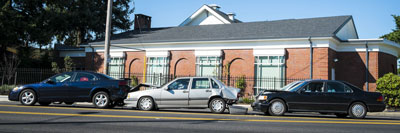 A property insurer, having paid for covered damage, can recover the loss by seeking reimbursement from its insured where the insured has recovered funds from a responsible third-party, or the insurer may pursue a claim directly against the third-party. If the insurer makes a direct claim against the responsible party, to what extent must the insurer allocate the money it recovers to reimburse the insured for its deductible? In an opinion issued on July 3, 2019, the Washington Supreme Court held that a fault-free insured must receive the full amount of its deductible before the insurer may allocate any of the recovered funds to itself. Daniels v. State Farm Mutual Automobile Insurance Co., Wash., No. 96185-9, 2019 WL 2909308 (July 3, 2019).
 Insurance companies may no longer be allowed to rely on clear policy language that expressly excludes general contractor overhead and profit (“GCOP”) from actual cash value payments. The Pennsylvania Supreme Court recently agreed to hear argument on the issue in Kurach v. Truck Insurance Exchange, Case No. 532 EAL 2018.
 Law enforcement in Miami-Dade County, Florida