 This week, after 7 years of failed efforts, the Florida Legislature passed a meaningful Assignment of Benefits (“AOB”) reform bill. Florida Governor Ron DeSantis announced yesterday that he would sign the legislation designed to cut back on abusive AOBs, a practice that has plagued the hurricane-prone state. In recent years, many contractors have taken advantage of Florida’s unique one-way attorney’s fee shifting statute for insurance coverage litigation. This rule has incentivized contractors to, via the assignment of benefits mechanism, charge property owners outlandish amounts and to then pursue needless, sometimes frivolous, and always expensive litigation against insurance companies.
Florida H.B. 7065, expected to take effect July 1, 2019, makes several key statutory changes designed to curb AOB practices. We discuss a few of those highlights here.
The bill establishes several new sections of the Florida Statutes, including Fla. Stat. § 627.7152. § 627.7152(2)(a) sets requirements for a proper assignment of benefits:
627.7152 Assignment agreements.—
(2)(a) An assignment agreement must:
1) Be in writing and executed by and between the assignor and the assignee.
2) Contain a provision that allows the assignor to rescind the assignment agreement without a penalty or fee by submitting a written notice of rescission signed by the assignor to the assignee within 14 days after the execution of the agreement, at least 30 days after the date work on the property is scheduled to commence if the assignee has not substantially performed, or at least 30 days after the execution of the agreement if the agreement does not contain a commencement date and the assignee has not begun substantial work on the property.
3) Contain a provision requiring the assignee to provide a copy of the executed assignment agreement to the insurer within 3 business days after the date on which the assignment agreement is executed or the date on which work begins, whichever is earlier. . . .
4) Contain a written, itemized, per-unit cost estimate of the services to be performed by the assignee. . . .
Under § 627.7152(2)(a), contractors will no longer be able to blindside their customers and insurers with exorbitant bills with the expectation that an insurance company will eventually pay it. Now, contractors will be required to provide detailed estimates in advance of performing the work in order to effectively obtain an assignment of insurance benefits. Further, the assignee must promptly notify the insurer of the assignment. Insurers will now be able to monitor costs as they are incurred and ensure contractors are not performing unnecessary repairs. Read more ›
About The Authors


 Read more ›


 The Eleventh Circuit, in J.P.F.D. Investment Corp. v. United Specialty Insurance Co., recently affirmed a district court’s denial of statutory attorneys’ fees to a policyholder that, to resolve a disagreement over the amount of loss, filed suit against its insurer instead of participating in appraisal.

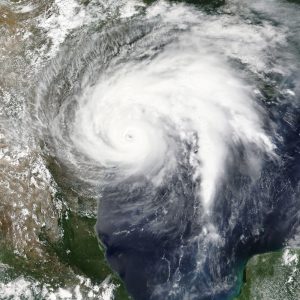 While Hurricane Ike made landfall in Texas almost ten years ago, the resulting litigation is alive and well as evidenced by the recent decision in Texas Windstorm Insurance Association v. Dickinson Independent School District, 14-16-00474-CV, 2018 WL 2436924 (Tex. App.—Houston [14th Dist.] May 31, 2018, no pet. h.). In that case, Houston’s Fourteenth District Court of Appeals addressed whether an unpaid appraisal award established an insurance company’s liability under a named-peril insurance policy as a matter of law. In analyzing and applying the Supreme Court of Texas’s decision in State Farm Lloyds v. Johnson, 290 S.W.3d 886 (Tex. 2009), the court held that the appraisal award, by itself, did not conclusively establish liability for purposes of the policyholder’s motion for summary judgment as to causation and damages.
 This is a question the Colorado Supreme Court is set to resolve after recently granting Owners Insurance Company’s petition for writ of certiorari in Owners Insurance Company v. Dakota Station II Condominium Association, Inc., 2018 WL 948601 (Col. Feb. 20, 2018).
 In a rare foray into insurance law, London’s Privy Council considered the interpretation of a Contractors’ All Risk (CAR) policy in Sun Alliance (Bahamas) Ltd v Scandi Enterprises Ltd (Bahamas),
 A not uncommon scenario: after examining the charred debris of a property fire, investigators note that the building’s alarm failed to sound and automatic sprinkler system similarly failed to activate because neither had been inspected or maintained for over a year. The policy that insured the property conditioned coverage on the protective safeguards’ maintenance and functionality. The insured’s failure to satisfy these conditions bars coverage for the loss.
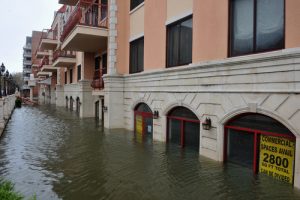 Cozen O’Connor attorneys Thomas McKay III, Richard Mackowsky, Charles Jesuit, and Melissa Brill recently secured summary judgment from the United States District Court for the Eastern District of New York in favor of Great Northern Insurance Company on claims asserted by Madelaine Chocolate Novelties seeking $49.5 million in coverage for Hurricane Sandy-related losses under an “all risk” property and business interruption policy.