 Texas has finally enacted statutory reforms specifically designed to combat abusive insurance litigation. Enacted primarily in response to hailstorm lawsuits, the scope of the reforms are much broader. Effective September 1, 2017, Section 542A of the Texas Insurance Code governs all lawsuits arising out of insurance claims where the damage was caused, either directly or indirectly, by the weather or other “forces of nature.”
Importantly, Section 542A finally affords insurers the opportunity to amicably resolve disputed claims without protracted litigation. However, insurers need to be prepared to make quick strategic decisions to take advantage of the law’s protections. The practical effect of Section 542A is to give insurers 60 days to “get their house in order” and make decisions that can provide generous protections from both contractual and extra-contractual liabilities.
- Changes to the 60-Day Notice Requirement
The key tenet of Section 542A is the change that it made to the pre-suit notice requirements in insurance-related litigation. For years, the Texas Insurance Code required a potential litigant to notify an insurer of the basis of the insured’s dispute at least 60 days before filing suit. The original purpose of this requirement was always to give the insurer and insured an opportunity to resolve the dispute amicably and without litigation.
The pre-suit notice requirement, however, was often ignored in practice. The only real recourse an insurer had when it did not receive the requisite notice was to have the case automatically abated until 60 days after the insured provided the notice. Automatic abatement did little to discourage plaintiffs’ lawyers from filing suit first. The case law developed in such a way that an insured could file suit, and then give the required notice while the lawsuit was pending with little consequences. Read more ›



 In February, the Nebraska Supreme Court held that it is acceptable for insurance companies to depreciate labor costs when determining the actual cash value (ACV) of damaged property, even when the insurance policy does not define “actual cash value” or “depreciation.” See Henn v. American Family Mutual Insurance Co., 295 Neb. 859 (Neb. 2017). Writing for the Nebraska Supreme Court, Chief Justice Michael Heavican concluded that all relevant facts and evidence should be used to calculate ACV, and both materials and labor constitute relevant facts to consider when establishing the value of property prior to the loss.
 Are an insurer’s attorney’s fee bills discoverable in first party claims? In In re Nat’l Lloyds Ins. Co., 2017 Tex. LEXIS 522 (Tex. 2017), the Texas Supreme Court considered this question in a hail MDL dispute and answered “No” in a lengthy opinion. The opinion is the latest development in a long-running dispute over “storm chaser” claims that recently gave rise to another round of tort reform in the Texas legislature.
 Many property insurance policies that provide coverage for business interruption losses also include “extra expense” coverage for reasonable and necessary extra costs to temporarily continue as nearly as possible normal business operations, or to reduce the period of time necessary to resume normal business operations. Some policies also include provisions, sometimes referred to as mitigation provisions, which afford coverage for additional costs incurred by an insured to reduce its business income losses in the event its business operations are disrupted because of a covered loss. The differences between the two coverages, and how they might apply in the event of an otherwise covered business interruption loss, will depend on the wording of the provisions and the facts of the claim.
 In 2011, the California Insurance Commissioner promulgated a regulation governing replacement cost estimates for homeowners insurance (Cal. Code Regs., tit. 10, §2695.183 [the Regulation]). After the trial court and intermediate court of appeal invalidated the Regulation,
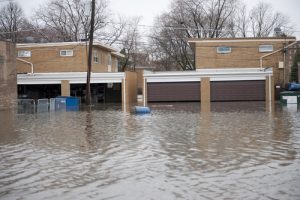 The preemptive effect of the National Flood Insurance Program (NFIP) on overlapping claims asserted by policyholders based on federal and state common law theories of liability is well established. “Numerous courts have held that claims other than those expressly authorized by the [National Flood Insurance Act (NFIA)] are preempted.”
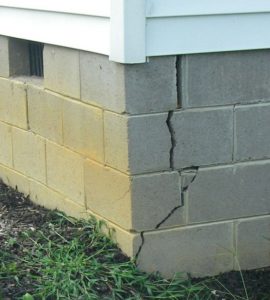 Does the efficient proximate cause rule serve to afford coverage for the additional costs to rebuild the foundation of a home in compliance with changed building code requirements beyond the sublimit of liability of an optional building ordinance or law endorsement? In an opinion ordered published on December 21, 2016, the Washington Court of Appeals said no, denying a homeowner the full cost of a new foundation as part of the repair of fire damage.
 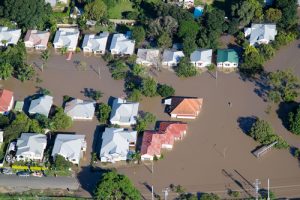 It is well-established that claim processing and wrongful denial of coverage disputes involving federal flood insurance policies belong in federal court because they present substantial questions of federal law. The U.S. District Court for the Western District of North Carolina recently applied this rule when it denied the insureds’ motion to remand a case to state court in
 Principle Solutions Group, LLC, an information technology company, lost $1.717 million when it became the victim of a fraud scheme for which it sought coverage under the terms of a commercial crime policy issued by Ironshore Indemnity, Inc. The policy provided coverage for “Computer and Funds Transfer Fraud,” “resulting directly from a fraudulent instruction directing a financial institution to debit your transfer account and transfer or, pay or deliver money or securities from that account.” At issue was the meaning of the word “directly,” as it pertained to the pending claim.