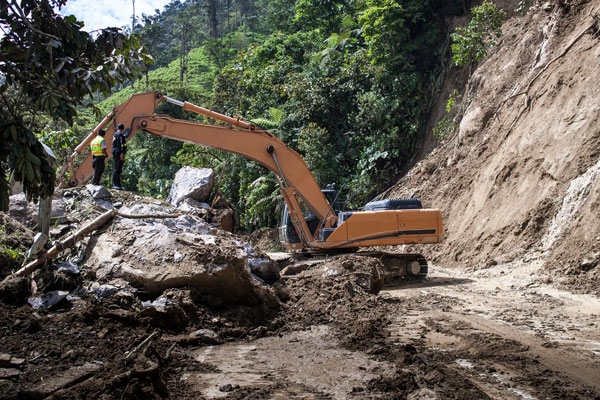
 On August 29, 2016, the U.S. Court of Appeals for the Tenth Circuit affirmed a Colorado district court ruling that the sudden obliteration of a building in a 2013 mudslide did not constitute an “explosion” under a commercial property policy. Accordingly, coverage for the loss was barred under the policy’s “Water Exclusion Endorsement,” which excluded coverage for, among other perils, “[m]udslide or mudflow.” Although the exclusion contained an exception for resulting losses caused by “fire explosion, or sprinkler leakage,” the Tenth Circuit held that the destruction of the building did not constitute an explosion as used in the exception to the exclusion. In construing the meaning of “explosion” as used in the water exclusion, the court emphasized that “context matters,” and holding otherwise would eviscerate the exclusion for “tidal waves, tsunamis and mudslides, which all typically produce extreme forces that can smash anything in their paths . . . .” See Paros Properties LLC v. Colorado Cas. Ins. Co., 2016 WL 4502286 at *8 (10th Cir. Aug. 29, 2016).
In September 2013, torrential rainfall triggered a violent flow of water, mud, and debris to careen down a hillside into a commercial building owned by the insured, Paros Properties LLC (“Paros”). After Paros submitted a claim to its insurer, Colorado Casualty Insurance Company (“CCIC”), for roughly $1.3 million in damages, CCIC denied the claim citing the policy’s “Water Exclusion Endorsement.” In particular, CCIC took the position that the damages were caused by a mudslide, and “mudslide or mudflow” were specifically excluded by the policy. Read more ›










 In the recent case of