 An issue that often arises in the context of property insurance is whether a carrier’s delay in adjusting a claim can create a basis for a viable bad faith claim. The law in each state is different and the prudent practice is to consult a practitioner specializing in the law of the state in question. This article focuses on Washington law and discusses two recent cases which illustrate the need to adjust property claims promptly. Failure to do so may expose a carrier to viable bad faith allegations sufficient to survive summary judgment and permit the policyholder to get its case before a jury.
First, in Hays v. State Farm Ins. Co., No. 46679–1–II, 191 Wn. App. 1053, 2015 WL 9435153 (Dec. 23, 2015), Division Two of the Washington Court of Appeals held that a roughly seven-month delay in responding to the insureds’ communications could amount to bad faith under Washington law. The court held this determination was an issue of fact for the jury.
In Hays, a February 2010 accidental fire totally destroyed the insureds’ home. The insurer acknowledged that this was a covered loss, and eventually paid the claim. However, the insurer and insureds had divergent accounts of the facts surrounding claims handling. According to the insureds, they received a check—without further explanation—in May 2010, and between June 2010 and October 2010 made repeated attempts to contact the insurer regarding the status of their claim, but received no response. In late October 2010, the insurer sent a more detailed response—including an updated appraisal of the insureds’ home requested by the insureds—but sent it to the insureds’ old address. It was not until December 2010 that the insureds alleged they actually received the correspondence to their correct address. Read more ›

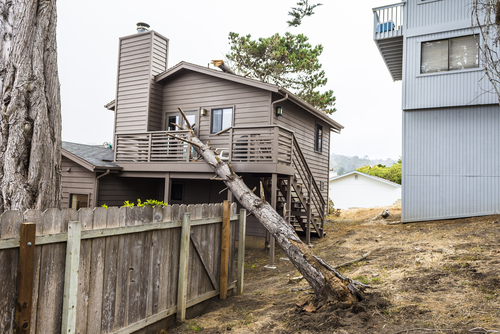




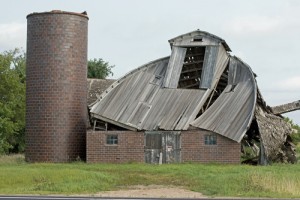 For years, property insurance policies that exclude rot damage have been called upon to cover rot because the policies extend coverage to “collapse”—an undefined term—caused by hidden decay, even if the structure remains standing and in use.
 Courts in a number of American states, notably California, have found that pollution exclusions in first-party policies are “inherently ambiguous” and that the purpose of such provisions is “to address liability arising from traditional environmental pollution, and not ‘ordinary acts of negligence involving harmful substances.’ ” On December 11th, the Vermont Supreme Court unanimously refused to follow that line of jurisprudence in
  The insureds owned a mobile home in Texarkana that sustained a covered loss in July of 2012. The policy provided that the company would pay the ACV, which was defined to mean “total restoration costs less depreciation.” Depreciation itself was then defined, and the contract of insurance expressly stated that when paying ACV, the carrier would “include the depreciation of the materials, the labor, and the tax attributable to each part which must be replaced[.]” In accordance with that, the amount paid by the insurer depreciated both materials and labor.
  The insureds owned a home in Lake in the Hills. On August 5, 2014, a fire rendered the dwelling uninhabitable, and the policyholders’ 19-year-old son, who resided with his parents, subsequently admitted to setting the blaze. The boy was sentenced to prison for the crime of aggravated arson. The carrier denied the insurance claim of the husband and wife in reliance on an intentional loss exclusion reciting that the policy did not cover “any loss arising out of any intentional or criminal act committed . . . by you or at your direction . . . with the intent to cause a loss.” The terms “you” and “your” were defined by the contract of insurance as meaning “the person or persons named in the Declarations and if a resident of the same household . . . the relatives of either[.]”