Last week, the Vermont Supreme Court firmly rejected the notion that an insured can bring a cognizable claim for negligence against his or her carrier in connection with the inspection and handling of a first-party property insurance claim. In Helena G. Murphy v. Patriot Ins. Co., 2014 VT 96, 2014 WL 3965639, 2014 Vt. LEXIS 101 (Vt., Aug. 14, 2014), the court recognized that the relationship was “fundamentally contractual” in nature and that a policyholder’s rights flowed solely from the insurance policy and the covenant of good faith and fair dealing implied in that instrument.
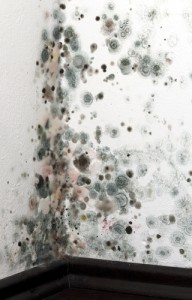 In July of 2007, the insured, Helena Murphy, reported damage to the roof of her house and interior water damage to her homeowner’s carrier, Patriot Insurance Company. The insurer promptly had the structure inspected by a claims adjuster, and it paid $3,553.05 for the loss. The policyholder then proceeded to make a series of additional claims over the course of the next few months, and Patriot ultimately tendered over $30,000 to Ms. Murphy, including the full policy limit of $10,000 for damage from mold and rot.
The insured contended, however, that it would cost in excess of $56,000 to remediate the remaining mold and rot, and she brought suit for breach of contract in June of 2008. An amended complaint was then filed adding, inter alia, claims against Patriot for negligence. Ms. Murphy alleged that Patriot had an independent tort duty to handle her claim in a reasonable manner and had violated that duty by negligently inspecting and processing the claim, with the result that she suffered additional property damage and also health problems associated with the mold infestation. Read more ›
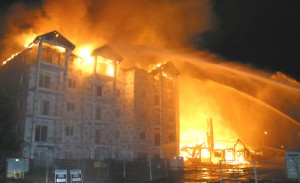 The insured, Caribbean Beach Club Association, owned a time-share condominium building in Fort Myers that was heavily damaged by fire in April 2003. It had property insurance coverage with Axis Surplus Insurance Company, and it had paid an additional premium for an Ordinance or Law Coverage Endorsement that provided up to $2.5 million for any increased cost of reconstruction incurred as a result of the enforcement of local ordinances or laws. The endorsement recited that the insured could not recover, however, until after the property was actually repaired or replaced and that reconstruction had to take place within two years’ time.
 The insured, Amish Connection, Inc., leased space in a mall in Waterloo, Iowa, and its merchandise was damaged after a 4” cast iron drain pipe above the ceiling burst during a rainstorm. The pipe carried water from the roof drains to a storm sewer. The policyholder reported the loss on the day after the storm, and its commercial property insurer, State Farm Fire & Casualty Company, denied by letter on the same afternoon, stating that the loss was “caused by rain.” The contract of insurance excluded loss “to the interior of any building or structure, or the property inside any building or structure, caused by rain, snow, sleet, ice, sand or dust, whether driven by wind or not[.]” Rain itself was not a defined term.
 The first decision was
  The policyholder owned a condominium building in Flint, Michigan that was heavily damaged by fire in November of 2010. The policy afforded coverage for ACV, which was defined in the contract of insurance to mean “replacement cost less a deduction that reflects depreciation, age, condition and obsolescence.” The insurance carrier, Cincinnati Insurance Company, determined that the value of the structure was $1,187,660.38, and it paid that amount to the insured. The policyholder contended that the building was actually worth $1.6 million more, however, and it demanded appraisal.
 The insureds, Peter and Susan Horvath, owned a home at the end of a cul-de-sac at the bottom of Bell Canyon Drive. On December 22, 2010, severe rainstorms led to what the husband described as a “river of water coming down the street.” The town’s drainage systems were overwhelmed, and the cul-de-sac quickly filled up, ultimately inundating the first floor of the insureds’ home with 18” of water. The couple were evacuated by firefighters, and the local municipality yellow-tagged the structure as unfit to live in.
 At present, the issue will not crop up nearly as frequently as it did in the wake of the 2005 storm because Katrina taught a lesson to underwriters everywhere; virtually all of today’s policies make it crystal clear that storm surge is a type of flood. The policy at issue in this case is a good example, but the Eastern District nonetheless implied that it would have barred coverage even if that were not the case.
 On October 29, 2012, the policyholder, El-Ad 250 West LLC, was converting an 11-story office building into a 12-story luxury condominium complex in lower Manhattan. Superstorm Sandy damaged the project to the tune of more than $20 million according to the insured. El-Ad had a builder’s risk insurance policy issued by Zurich American Insurance Company. The contract of insurance had a $115 million overall limit of liability, but delay in completion coverage was sub-limited to $7 million. In addition, there was a $5 million annual aggregate limit for flood loss, which was defined as follows:
 The policyholder Sandra Willis’ home was damaged by a fire on June 14, 2012, and she made a claim under her homeowner’s policy with Allstate Insurance Company. The insurer then hired an attorney, David Waldrop, to provide an opinion on coverage. Waldrop did so in a letter dated February 19, 2013, and Allstate subsequently denied liability. The insured responded by filing suit for breach of contract and bad faith.
 One of the two principal bones of contention was a claim for over $50,000 for a feng shui consultant. Dr. Patel utilized feng shui when she initially opened her dental practice. Prior to reopening after the fire, she did so once again, and the claim included a “Five Elements Feng Shui Invoice” in the amount of $50,275. According to her affidavits, the feng shui consultant was retained “to come in and change crystals and perform additional cures to help to restore the location to its original condition,” to “restore energy balance,” and to determine “placement of furniture and dealing with forces of Qi.” The policy insured against “direct physical loss of or damage to Covered Property,” an0d Dr. Patel contended that the consultant’s services fit within that definition because she had used him when she had originally set the office up. She also sought to invoke coverage under the contract of insurance’s extra expense provision.