In most jurisdictions, underlying coverage issues must be resolved prior to invoking appraisal in a first-party property claim. The question of what constitutes a coverage issue (typically reserved for a court’s judicial determination) and what constitutes a damage issue (appropriate for an appraisal panel’s consideration), however, is not always readily apparent. A routine subject of this particular appraisal debate is whether causation is a coverage or a damages inquiry, and recent decisions under Florida, Georgia and Texas law are evident of two things: (1) the determination of the issue is, in large part, factually dependent; but (2) the debate is far from over.
In a recent appellate decision, Citizens Prop. Ins. Corp. v. Denetrescu, 2014 WL 1225124, — So.3d — (Fla. 4th DCA, March 26, 2014), Florida’s Fourth District Court of Appeal found that causation is a coverage question and only for the court’s consideration when the underlying facts include a complete coverage denial by the insurer. There, the insurer issued such a denial for wind and rain damage to a roof and the resulting contents damage based on policy exclusions for wear and tear, neglect, and pre-existing damage, as well as on the policyholder’s non-compliance with post-loss duties under the contract of insurance. The policyholder filed a lawsuit challenging the insurer’s denial and filed a motion to compel appraisal during the course of discovery. In the lower court’s order granting the policyholder’s motion, the court included the its coverage determination – namely that “water leaks are covered under the policy” and that the insurer’s “affirmative defenses dealing with specific exclusions under the policy are appropriate for appraisal as the defenses deal with the causation of the damages.”
 On appeal, the District Court of Appeal completely rejected the lower court’s use of an order compelling an appraisal as a vehicle to make coverage determinations, finding that it was procedurally improper and violated due process. The court was clear that, under Florida law, such coverage determinations are only appropriate when based on competent evidence reviewed through either summary adjudication or at trial. Additionally, and in light of the insurer’s complete denial of the damage at issue, the District Court of Appeal held that a judicial determination on all coverage issues, including causation, must first be made by the court. In reaching its ruling, the court cited a Florida Supreme Court decision, Johnson v. National Mut. Ins. Co., 828 So.2d 1021, 1022 (Fla. 2002), which held that “causation is a coverage question for the court when an insurer wholly denies that there is a covered loss and an amount-of-loss question for the appraisal panel when an insurer admits that there is covered loss, the amount of which is disputed.”
In Texas, the United States District Court for the Southern District also addressed whether causation could fall within the permissible scope of appraisal under in its January 30, 2014 decision in United Neurology, P.A. v. Hartford Lloyd’s Ins. Co., 2014 WL 345666, — F. Supp.2d — (S.D. Tex. January 30, 2014) concluding that causation was within the appraisal panel’s authority where a partial denial of coverage was at issue. The United Neurology case arose from a policyholder’s claim for a complete roofing system replacement and payment for interior damage and loss of income associated with two rental properties following Hurricane Ike. Due to the insurer’s finding that a substantial portion of the damage was not caused by the hurricane – but rather from expressly excluded causes of loss, including pre-existing wear and tear and post-loss neglect – the insurer issued a partial denial and invoked the appraisal clause. Read more ›

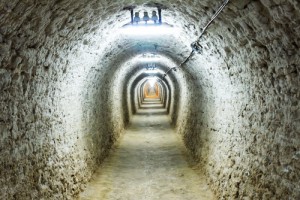 Lyons notified Lexington of the water inflow in July 2010, after it had already spent $2.5 million on the problem. The insured sought coverage under six Lexington policies of “all risk” property insurance issued between March 2004 and April 2010. Suit was filed in the Spring of 2011 after Lexington refused to commit to reimbursement. The sworn statement in proof of loss that Lyons submitted in December of 2010 sought $7.5 million, and the policyholder was estimating that the total cost of investigating and fixing the intrusion would top $11 million as of last year.


 Sandy struck several hours later, causing extensive flooding in lower Manhattan. The Bowling Green Network suffered “extensive water damage” from the flooding, and Con Edison spent the next several days pumping out the water and cleaning, testing, and – as necessary – replacing its equipment. The network was re-energized early in the morning on November 3.
 In January, the Senate passed a bill which called for a four-year delay of the rate increases imposed by the Biggert-Waters. House leaders, however, wanted a more permanent fix, and they also wanted to avoid adding to the insolvency of the NFIP. Thus, the Homeowner Flood Insurance Affordability Act was born. The bill proposes, among other things: (1) to roll back certain rate increase “triggers” so that policyholders will no longer face rate increases as a result of the sale of a home or a lapse in coverage; (2) to provide a refund for those who already got hit under the foregoing provisions; (3) to restore “grandfathering” so that homes and businesses that were previously built to code and later remapped into a higher risk area by FEMA won’t face rate increases due to the remapping; and (4) to impose a cap on FEMA’s ability to raise annual insurance premium rates. Under the bill, FEMA can still increase premiums for owners of homes built before the flood insurance rate maps, but the increases have a hard cap of 18 percent per year (down from 20 percent under Biggert-Waters), and will typically range from only 5 percent to 15 percent.
 The policyholder, Millennium Inorganic Chemicals, Ltd., processed titanium dioxide at its facility in Western Australia, using natural gas that it received via a pipeline. It purchased the gas from Alinta Sales Pty Ltd., a retail gas supplier. Alinta, in turn, purchased the gas it supplied to Millennium from others, including Apache Corporation.
 Faced with what she described as “an onslaught” of lawsuits, the district’s Chief Judge Carol Bagley Amon ordered the clerk to open a miscellaneous civil case captioned “In Re: Hurricane Sandy Cases,” Docket No. 14 MC 41, on January 10 “for the purposes of Pretrial Case Administration in all actions seeking insurance coverage for damage caused by Hurricane Sandy.” She simultaneously directed three magistrate judges “to evaluate and make a recommendation regarding how to best handle all Hurricane Sandy cases.”
 Peerless Insurance Company issued a $1 million fire insurance policy to Executive Plaza. This gave Executive the choice to select payment of “actual cash value” or payment of “replacement cost.” The policy also provided that Peerless would not pay the replacement cost for any loss or damage until the property had actually been repaired or replaced. Finally, the policy contained a suit limitation clause that required the insured to commence any legal action within two years from the date of loss.
 In October of 2005, Hurricane Wilma damaged three apartment complexes in Broward County, Florida. The property manager for all three was Banta Properties, Inc., a company owned by various Banta family members. The individual family members also owned two of the three properties at the time of the storm, having sold the third one (Parkcrest Apartments) to an unrelated, non-party entity two months beforehand.
 The Preislers owned a dairy farm with cattle, and they used a well to stock a pool on the property. For several years, they had defendant Kuettel’s Septic spray several thousand gallons of septage on their farmland. Kuettel’s Septic was in the business of removing, hauling, storing and disposing of the substance, which comes from septic tanks, grease traps, floor pits, and car washes. It is disposed of by either taking it to a treatment facility or by spreading it on farmland as a fertilizer. It contains high levels of nitrogen.