The “where you reside” language in the homeowners forms that the Insurance Services Office (ISO) has published since 1991 have spawned litigation around the country for over 20 years, given the number of scenarios which could see the named insured either temporarily or permanently not “in residence” at the property covered by his or her homeowners carrier. In an effort to remedy that, ISO has now released new forms that revise the definition of a “residence premises;” they had an effective date of October 1st in most states.
 The problematic portion of the old forms was the three-word phrase “where you reside.” The homeowners insuring agreement in the existing ISO program recited that coverage was afforded for “the dwelling on the ‘residence premises’ shown in the Declarations[.]” “Residence premises” was then defined as follows:
“Residence premises” means:
- The one-family dwelling where you reside;
- The two-, three-, or four-family dwelling where you reside in at least one of the family units; or
- That part of any other building where you reside; and which is shown as the “residence premises” in the Declarations. Read more ›
 The insured owned a three-unit residence in Boston which was vacant in December of 2009. The heat was turned off at the time. On December 19th, records from the city’s Water and Sewer Commission showed that the rate of water usage at the property “increased dramatically” in the words of the opinion – it jumped seventeen-fold. The policyholder visited two days later on December 21st, but he did not go into any of the individual units and saw no damage. On December 28th, the Commission notified that insured of the spike in usage, and he returned to the property and found a leak under a sink in the third floor apartment and substantial water damage to the structure.
 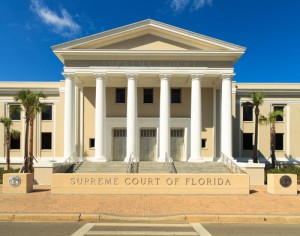 For years, Florida courts have been seesawing between two different doctrines to determine whether there is coverage under a property policy when two perils – one excluded and one included — combine to cause a loss. Two districts of the state’s intermediate level appellate court have applied one test and a third has applied another, with the most recent decision being
  The policyholders owned a home in Alton, Illinois that was totally destroyed by “a mine subsidence event” on May 28, 2011. The contract of insurance – a Chubb Masterpiece Policy with “Deluxe House Coverage” – afforded $3,236,000 in dwelling coverage, but it excluded “any loss caused by earth movement, including volcanic eruptions, landslides, mud flows, and the sinking, rising, or shifting of land[.]” Illinois’ Mine Subsidence Act required that the insurer afford $750,000 in coverage for loss by that peril, however.
 The insureds alleged that their home was damaged by sinkhole activity in March of 2011. The insurer denied, contending, inter alia, that while the contract of insurance did not expressly include or exclude sinkhole loss, it did bar coverage for damage caused by “the sinking, rising, shifting, expanding, or contracting, of earth or any other supporting, or surrounding, material.” The policyholders then brought suit. When the contract of insurance incepted, Tenn.Code Ann. § 56-7-130(b) recited that “[e]very insurer offering homeowner property insurance in this state shall make available coverage for insurable sinkhole losses on any dwelling.” It was undisputed that the carrier never informed the insureds that they could purchase sinkhole coverage, and their complaint asserted that that was a violation of the statute.
  The insured owned a commercial building in Boulder, a city which experienced unprecedented rainfall in September of 2013. On September 12th, “a violent flow of water, mud, rocks, trees, and other debris traveled down a nearby hillside [and this] knocked down a wall of the building, causing the building to partially collapse.”
 In February, we reported on an Alabama federal court decision that barred an insured from recovering for employee theft where the only evidence of shortage was a comparison between computer records and a physical inventory conducted after the malefactor had been discharged. On August 6th, a unanimous panel of the Eleventh Circuit affirmed in
  The insured’s home was damaged by 2011’s massive Bastrop County Complex Fire. After disputes arose over the amount of loss, the insurer invoked the appraisal clause in the contract of insurance. The parties’ appraisers were unable to agree on an umpire, and the carrier then requested that the court appoint one. The district judge proceeded to do so, and, four months later for unspecified reasons, removed him and appointed a replacement umpire in his stead.
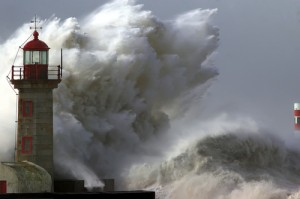 There are obviously many reasons for this. The west is undergoing a historically severe drought; the snowpack in California is currently 5% of what it should be. The region is also suffering from extreme heat; 2015 is the second warmest year ever recorded in Alaska, and temperatures in the west as a whole are now averaging two degrees hotter than they did in the 1980’s. This year’s “Godzilla” el Niño is also a factor, because that tends to heat the west coast but inhibit hurricane formation in the Atlantic basin.
 The insureds owned a home in Seaside Heights that was demolished by the storm on October 29, 2012, and they filed a claim for “storm damages.” Their homeowners carrier had the property inspected by an engineer, and he concluded that while wind had caused some damage to the structure, its loss was primarily attributable to storm surge and flooding.