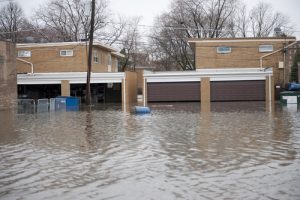
 The preemptive effect of the National Flood Insurance Program (NFIP) on overlapping claims asserted by policyholders based on federal and state common law theories of liability is well established. “Numerous courts have held that claims other than those expressly authorized by the [National Flood Insurance Act (NFIA)] are preempted.” Slay’s Restoration, LLC v. Wright National Flood Insurance Company, Civil Action No. 4:15cv140 (E.D. Va. Jan. 3, 2017). In other words, if additional sums are allegedly owed under a Standard Flood Insurance Policy (SFIP), “the precisely drawn and detailed statutory and regulatory system in place under the NFIA and the SFIP provides the exclusive remedy.” Typically, the preemptive impact of the NFIP has been applied to preclude state court actions or state law claims challenging the denial of coverage or the handling of claims under SFIP policies.
In Slay’s Restoration, however, the Eastern District of Virginia was called upon to address a unique attempt by a non-policyholder, specifically a flood restoration company retained by the policyholder after a flood, to assert a claim under the federal Racketeer Influenced and Corrupt Organizations (RICO) Act against a Write Your Own (WYO) flood insurer and its adjusters for allegedly conspiring to fraudulently deny legitimate claims. The court rejected the non-policyholder’s attempt to fashion a RICO claim for two reasons: (1) lack of standing and (2) the preemptive effect of the NFIP.
The policyholder at issue, City Line Associates, LPs (City Line), owned 200 apartment units in 18 buildings in Newport News, Virginia that experienced flooding on September 9, 2014. Each of the buildings was insured under a separate SFIP issued by Wright National Flood Insurance Company (Wright National) as a WYO carrier. City Line contracted with First Atlantic Restoration, Inc. (First Atlantic) to remediate and repair the damage, and First Atlantic in turn subcontracted the entire scope of work to the plaintiff, Slay’s Restoration, LLC (Slay’s). City Line made 18 separate claims with Wright National for the costs associated with First Atlantic’s and Slay’s work on the impacted buildings, and Wright National dispatched an adjusting firm and its consultants to inspect and evaluate the claims. Read more ›

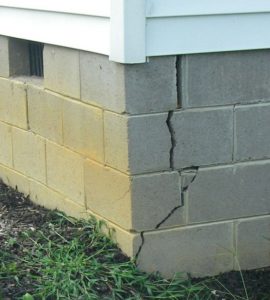 Does the efficient proximate cause rule serve to afford coverage for the additional costs to rebuild the foundation of a home in compliance with changed building code requirements beyond the sublimit of liability of an optional building ordinance or law endorsement? In an opinion ordered published on December 21, 2016, the Washington Court of Appeals said no, denying a homeowner the full cost of a new foundation as part of the repair of fire damage.
 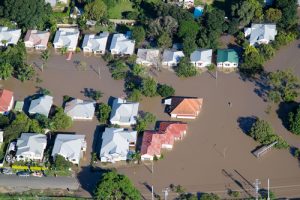 It is well-established that claim processing and wrongful denial of coverage disputes involving federal flood insurance policies belong in federal court because they present substantial questions of federal law. The U.S. District Court for the Western District of North Carolina recently applied this rule when it denied the insureds’ motion to remand a case to state court in
 Principle Solutions Group, LLC, an information technology company, lost $1.717 million when it became the victim of a fraud scheme for which it sought coverage under the terms of a commercial crime policy issued by Ironshore Indemnity, Inc. The policy provided coverage for “Computer and Funds Transfer Fraud,” “resulting directly from a fraudulent instruction directing a financial institution to debit your transfer account and transfer or, pay or deliver money or securities from that account.” At issue was the meaning of the word “directly,” as it pertained to the pending claim.