
Matching issues are frequently problematic when storms damage only portions of an insured structure’s exterior and it proves impossible to replace the damaged sections with material that is an exact match for the rest of the building’s roof or siding. Earlier this month, the Minnesota Supreme Court held that the phrase “comparable material and quality” means material that is suitable for matching; with respect to color, a reasonable match – not an identical match – is all that is required. In Cedar Bluff Townhome Condominium Ass’n. v. American Family Mut. Ins. Co., – N.W.2d – , 2014 WL 7156914, 2014 Minn. LEXIS 661 (Minn., Dec. 17, 2014), however, the court held that that meant that all of the siding on 20 buildings had to be replaced to avoid a color mismatch even though less than 2% of it had actually sustained hail damage.
The insured, Cedar Bluff Townhome Condominium Association, owned a residential complex that sustained hail damage in October of 2011. There was at least some siding damage to each building. The siding panels were 15 square feet in size, and between one and ten panels were damaged on each structure. Overall, however, less than 2% of the siding in the complex as a whole had actually been damaged by hail.
The policy issued by American Family Mutual Insurance Company afforded coverage for “direct physical loss of or damage to Covered Property,” and there was a Loss Payment clause that obligated the carrier to pay “the cost of repairing or replacing the lost or damaged property.” The contract of insurance was also written on a replacement cost basis, and it recited that replacement cost was determined based on the cost to replace the lost or damaged property with other property “of comparable material and quality.” The siding was 11 years old, and the color of the panels had faded. The manufacturer had replacement panels that were identical in model name, size, texture, and installation methodology, but they were not available in a color that matched the faded siding. American Family offered to pay $6,800 to replace those panels that had actually been damaged by hail, but Cedar Bluff sought over $361,000 to replace all of the 20 buildings’ siding. Read more ›
 Congress has a bad habit of larding important legislation like TRIA with wholly-unrelated provisions, and it was one of those that doomed reauthorization. When the Senate wrote its own reauthorization bill earlier this year, it proposed including a provision creating the National Association of Registered Agents and Brokers (NARAB), a non-profit clearinghouse made up of state insurance commissioners and insurance market representatives which would oversee and streamline the licensing of agents and brokers. Senator Tom Coburn (R-Okla.) was opposed, believing that to be a federal infringement on authority traditionally reserved for the individual states, and the Senate bill that was sent to the House on July 17th sunset NARAB after two years.
 The House of Representatives’ Financial Services Committee sent a reauthorization bill to the House floor on June 20th, but it was never voted on by the full chamber. It had been passed out of the committee on a partisan 32-27 vote, and its sponsors evidently felt that it reduced the federal government’s backstop role too drastically to have any chance of passing the Senate. The upper chamber then passed a reauthorization bill of its own on July 17th by a 93-4 vote and sent it to the House, but it languished there until recently as TRIA’s expiration date grew ever closer.
 Alfredo Mejia owned a home that was insured by Citizens Property Insurance Corporation, and he made a claim for damage, contending that it was caused by sinkhole activity. The insurer retained BCI, an engineering firm, and it denied liability after BCI concluded that the damage was not caused by a sinkhole. A breach of contract action followed.
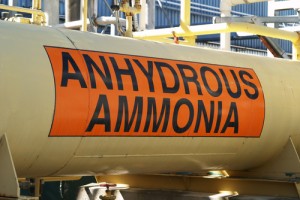 Gregory Packaging manufactured and sold juice cups, and it was in the process of installing a refrigeration system at a new plant in Newman, Georgia when anhydrous ammonia was accidentally released into the facility, severely burning a subcontract worker. The plant was evacuated, and a remediation company was retained to dissipate the gas. That process took several days.
 G & S Metal Consultants filed suit for property damage and business interruption loss after a steam explosion at a Georgia facility. After discovery was complete, the insurer, Continental Casualty, successfully sought permission to file an amended answer asserting additional affirmative defenses and a counterclaim based on alleged misconduct by G & S during the claim adjustment process that it had allegedly learned of during discovery, and the court reopened discovery to allow the policyholder to defend against the counterclaim. The insured then sought to question the carrier’s 30(b)(6) designee about reserves, and it filed a motion to compel after Continental’s attorneys objected to that line of questioning.
 The Strausses had constructed a home in Mequon, Wisconsin in 1994, and they were insured by four separate Chubb carriers from then until October of 2005. In October of 2010, Mr. and Mrs. Strauss discovered that a defect during construction in 1994 had been allowing water infiltration during every rainstorm over the past 16 years, causing damage to the building’s envelope. They made claim under the 1994-2005 Chubb policies, but the insurers denied liability, and the Strausses brought suit in federal court in October of 2011, within one year of their discovery of the damage.
 Plaintiff Wakefern was a buying cooperative consisting of the owners of ShopRite and PriceRite supermarkets, and it had a commercial property policy issued by Lexington Insurance Company. After Superstorm Sandy struck on October 29, 2012, Wakefern made claim for over $50 million in damage at dozens of different locations.
 Jane Street Holding, LLC was a trading company with offices in One New York Plaza in lower Manhattan. On September 2, 2011, it purchased a commercial property policy from Aspen American Insurance Company for the 2011-2012 policy year. Jane Street subsequently bought a $2.2 million generator and installed it in the basement of One New York Plaza. The policy was renewed “as expiring” on September 2, 2012, and the generator was totally destroyed when Superstorm Sandy struck on October 29, 2012 and flooded Lower Manhattan.
 Justin and Brandy Porter owned a home that was damaged when raw sewage entered the premises on November 14, 2009. Their homeowners carrier was Oklahoma Farm Bureau Mutual Insurance Company, and the insurer denied. Litigation followed. After the district court granted Oklahoma Farm Bureau’s motion to dismiss and the state’s intermediate level appellate panel affirmed, the Oklahoma Supreme Court granted the Porters’ writ of certiorari.