In December, we published a post about a Minnesota Supreme Court case that held that under a replacement cost policy, the phrase “comparable material and quality” meant that all of the siding on 20 buildings had to be replaced to avoid a color mismatch, even though less than 2% had actually been damaged by hail. According to the court, that was necessary to ensure a “reasonable” color match. Last week, a unanimous panel of Missouri’s intermediate level appellate court reached a similar conclusion under a replacement cost contract of insurance that required replacement “for equivalent construction and use.” In Alessi v. Mid-Century Ins. Co., 2015 WL 3874799, 2015 Mo.App. LEXIS 679 (Mo.App., Jun. 23, 2015), the judges held that the word “equivalent” requires that replacement be both “equal in value” and “virtually identical.”
 The policyholder owned a home in St. Charles that sustained siding damage in a hailstorm in April 2012. The damage was confined to the home’s northern side, and the carrier paid the actual cash value for replacement of all of the siding on that portion of the building. Because the original siding was no longer manufactured, however, the insured contended that she was entitled to recover for replacing the siding on the entire structure, and she brought suit after the insurer refused. Read more ›
 The policyholder operated a welding business in Uniondale, and the company stored scrap metal in an ungated yard on the property. As summarized by the court, the undisputed facts were as follows:
 Washington State has long been a jurisdiction with no judicial pronouncement as to the meaning of the term “collapse” in a property insurance policy, but that changed last Thursday when the state’s Supreme Court issued its decision in
  The policyholder had contracted for the construction for a parking garage adjacent to a performing arts center in Kansas City, and the project included the installation of a 50’ high concrete retaining wall between the structure and an adjacent limestone rock face. The original design called for up to 18” of concrete slurry to be poured between the wall and the limestone embankment, but, at the general contractor’s insistence, it was modified to permit up to 36” of the fill material to be installed. While the slurry was being pumped in place, the wall cracked and failed, and it was uncontested that the change to 36” of fill was a design defect.
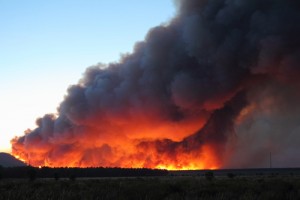 The policyholders owned a home with a detached garage in Alpine, Arizona. Beginning on May 29, 2011, eastern parts of the state and western New Mexico were devastated by a massive blaze known as the Wallow Fire – we published a post about an Arizona district court decision concerning business interruption loss that stemmed from that conflagration last month. The fire consumed the detached garage and all of the vegetation on the nearby hillside, but it did not reach the house. On August 6, 2011, however, one month after the Wallow Fire had been contained, there was a mudslide on the hillside, and mud and runoff water from flooding destroyed the home.
 Instead of contending that the “requirements in case of loss” language mandated the tapes’ production, of course, the insurer should have sought them through regular discovery and moved to compel if they weren’t forthcoming. It is hard to see how the policyholder could have resisted that motion given her allegations of bad faith.
 Early last month a federal court in Indianapolis barred a policyholder from seeking the claims and underwriting files of the defendant carrier’s reinsurer in
  The insured owned a house and secured a homeowners policy that also extended coverage to his mortgagee. The mortgage company instituted foreclosure proceedings and the policyholder vacated the dwelling, but only after removing fixtures and damaging property to the tune of $246,025. The mortgagee’s subsequent insurance claim was denied, and litigation ensued.
 The Keystone State has not seen the dramatic uptick in earthquake activity that has shattered both nerves and property in Oklahoma in recent years. Because of the hydrocarbon-rich Marcellus Shale formation, however, it remains a jurisdiction with more oil and gas drilling than all but a handful of other states, and many homeowners have purchased earthquake endorsements in view of the widely-publicized rise in seismic activity in many such places.
  The property at issue was a former slaughterhouse in Askum that had been vacant since 2005. The policyholder (Brothers Future Holdings) acquired it in 2007 intending to use it for a contract cooking venture, but that business turned out to be stillborn. Property insurance was duly procured, based on an application reciting the structure was “100% owner-occupied.” The mortgagee came on board in August of 2007, and the insurer’s agent was contacted by the mortgage company and issued an “Evidence of Property Insurance” document to the mortgagee indicating that coverage was in place.