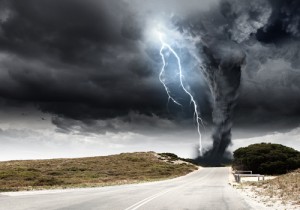
 “Read the policy, read the policy, read the policy” is a famous piece of advice for coverage counsel everywhere. Last Friday in Midwest Reg’l Allergy, Asthma, Arthritis & Osteoporosis Center v. Cincinnati Ins. Co., 2015 WL 4590642, 2015 U.S. App. LEXIS 13430 (8th Cir., Jul. 31, 2015), a unanimous panel of the Court of Appeals rejected arguments that a contract of insurance required that any Extra Expense serve to reduce the otherwise payable business income loss in order to be compensable. As interpreted by the court, the policy was written in such a fashion as to make that a prerequisite for only one of the three defined types of Extra Expense.
The insured operated a clinic in Joplin, Missouri. On May 22, 2011, the city was devastated by an F5 tornado that killed 158 people and caused almost $3 billion in damage, making it the costliest in U.S. history. The clinic was in the twister’s path; its MRI machine was heavily damaged and its x-ray machine, bone density scanner and laboratory analysis and specialty infusion equipment were all destroyed. The policyholder relocated to temporary offices in nearby Webb City and continued to operate, but it did so without the revenue streams which it would have received from the damaged and destroyed devices. Read more ›
 A storm damaged the insured’s roof in December 2013, and she made claim under her homeowners policy. The contract of insurance called for payment on an ACV basis unless the damage had been completely repaired or replaced, and it defined ACV as “[t]he amount which it would cost to repair or replace damaged property with property of like kind and quality, less allowance for physical deterioration and depreciation, including obsolescence.” The insurer paid this amount after determining the replacement cost and depreciating both materials and labor, and it subsequently tendered the holdback after the roof had been fixed. The insured then brought suit, seeking class action status and arguing that the carrier’s practice of depreciating the cost of labor when determining ACV was unlawful.
 In December, 2008 Allstate and four affiliated companies brought suit against 63 defendants, alleging the violations of IFPA. Those sued included physicians, chiropractors, and medical and equipment providers. The 604 paragraph complaint asserted that the defendants that engaged in a wide-ranging scheme to defraud the carriers of over $8 million by providing unnecessary care, engaging in fraudulent testing, creating bogus medical bills and records, and even staging accidents and recruiting accident victims. The plaintiffs sought compensatory and treble damages, as well as equitable relief in the form of disgorgement of benefits already paid and liens on the defendants’ assets.
  The policyholder owned an apartment building in Oakland that was damaged by fire in November of 2010. The blaze was confined to one unit, and the insurer valued the loss at approximately $180,000. The insured contended that there was extensive fire and smoke damage to five other apartments, however, requiring that all six units be completely gutted and rebuilt and that the building’s exterior be renovated and repainted. Her claim exceeded $800,000.
 In
In 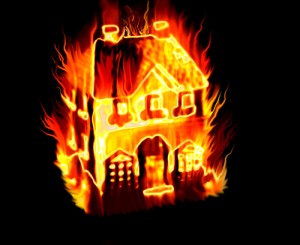 The insured owned a home in Lake City that was heavily damaged by fire on February 27, 2013. It was undisputed that the dwelling was vacant at the time of the blaze and that the fire was caused by arson. The insurer denied liability and filed a declaratory judgment action, seeking an adjudication that the loss was excluded. After cross-motions for summary judgment were filed, the trial court held that the contract of insurance was ambiguous and construed it in favor of coverage.
 Advance Cable had a building in Middleton, Wisconsin that sustained hail damage on April 3, 2011. The insurer’s claim representative inspected the roof and observed no damage. Six months later, the policyholder was contemplating a sale, and the buyer had the structure looked at. Its inspector stated that there was “definitely hail damage,” and the insured asked the carrier to reopen its claim. The resulting report by the insurer’s representative found hail dents up to 1” in diameter but concluded that these neither “affect[ed] the performance of the [roof] panels” nor “detract[ed] from the panels’ life expectancy.” There was no evidence of record to the contrary.
  The policyholder was a developer that was converting an office building in Tribeca in lower Manhattan into luxury condominiums when Superstorm Sandy flooded the premises in October of 2012. The storm caused more than $20 million in property damage and delay in completion loss. The insured had a builder’s risk policy with a $115 million overall limit of liability, but there was a $7 million sub-limit for delay in completion and a $5 million sub-limit for “all losses or damages arising during a continuous condition as defined in the definition of FLOOD.”
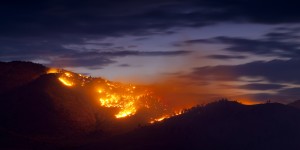 Last Thursday in
  At the present time, Oklahoma is at the “sharp end of the spear” with respect to this issue because the state experienced fully 567 quakes of Magnitude 3.0 or greater in 2014. That is the more than in the proceeding 30 years combined, and Oklahoma is on track to see fully 1100 such earthquakes n 2015! When he released his bulletin in March, the state’s Insurance Commissioner stated that his office would assume that the state’s quakes were not man-made “[u]ntil a legal ruling is made.” It now appears that just such a ruling may well be coming in the Sooner State.