 Monday saw a unanimous panel of Massachusetts’ intermediate level appellate court reject a policyholder’s ensuing loss arguments. In H.P. Hood LLC v. Allianz Global Risks U.S. Ins. Co., 2015 Mass. App. LEXIS 175, 2015 WL 6629484 (Mass., Nov. 2, 2015), the justices held that the loss of over two million bottles of an energy drink was not separate or different in kind but rather “directly caused by, and completely bound up in” the excluded peril — faulty workmanship and design of the bottle caps.
The insured produced a high-performance protein supplement known as Myoplex for Abbott Laboratories, and it had contracted to manufacture some forty million bottles in 2009. The drink was a “shelf stable” beverage that did not require refrigeration until after it was opened, and that meant that the bottles had to maintain a hermetic seal. In May of 2009, “secure seal” testing revealed that some 7% of the bottle caps were failing to maintain a seal, and Abbott ultimately rejected all two million bottles in the May 2009 production run. Subsequent investigation disclosed that the liners in the caps became more slippery over time. That meant that the caps needed more torque than the existing production process called for to seal properly. Read more ›
 The policyholder had a building in Burnsville that had been vacant for four months when the mortgagee/bank was added to the contract of insurance. Seven months later, while still vacant, the structure was vandalized. The bank submitted an insurance claim, but this was denied because the policy recited that loss by vandalism was excluded “[i]f the building where loss or damage occurs has been vacant for more than 60 consecutive days before that loss or damage occurs.”
 The insureds owned a house in Tarzana. In early 2013, concerned over recurring watermarks, they had a general contractor and a structural engineer inspect the rear deck on the home. The consultants found severe decay from corrosion in steel beams beneath the structure in an area concealed by the deck floor, and they advised the policyholders that the upper portion of the house was in danger of falling. The insureds immediately took steps to remediate the home, and they ultimately spent $91,000 in doing so.
  The insureds owned a home in Little Silver that was inundated by 20”-36” of water when a creek behind their property overflowed its banks during Superstorm Sandy on October 29, 2012. They initially attempted to clean the house themselves, removing the carpeting and hiring a certified cleaning and restoration company. When the president of the clean-up concern visited the site, however, he told everyone to stop what they were doing, saying that the water was “very unhealthy and dangerous.” He later opined that it was Category 3 water – a substance that is “highly contaminated and could cause death or serious illness if consumed by humans.”
  Two weeks ago in
  The insured owned a seasonal cabin in Duck Creek that was not used during the winter months, and his practice was to leave both the water and the heat turned on. At some point during the early months of 2011, a valve under the sink in the basement wet bar failed. The consequences were discovered when the wife of one of his employees visited the building in April, 2011. According to the insurance adjuster’s report, there was “extensive mold damage throughout the house” and “[m]old upstairs on every wall and ceiling in [the] home.” Water district records showed that the policyholder’s water bill had jumped from $15 in January to $93.75 in March, but this went unnoticed because the bills were “automatically paid” by his office.
  The problematic portion of the old forms was the three-word phrase “where you reside.” The homeowners insuring agreement in the existing ISO program recited that coverage was afforded for “the dwelling on the ‘residence premises’ shown in the Declarations[.]” “Residence premises” was then defined as follows:
 The insured owned a three-unit residence in Boston which was vacant in December of 2009. The heat was turned off at the time. On December 19th, records from the city’s Water and Sewer Commission showed that the rate of water usage at the property “increased dramatically” in the words of the opinion – it jumped seventeen-fold. The policyholder visited two days later on December 21st, but he did not go into any of the individual units and saw no damage. On December 28th, the Commission notified that insured of the spike in usage, and he returned to the property and found a leak under a sink in the third floor apartment and substantial water damage to the structure.
 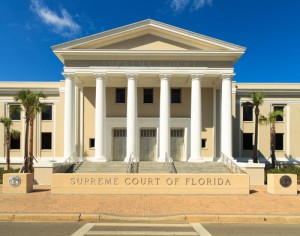 For years, Florida courts have been seesawing between two different doctrines to determine whether there is coverage under a property policy when two perils – one excluded and one included — combine to cause a loss. Two districts of the state’s intermediate level appellate court have applied one test and a third has applied another, with the most recent decision being
  The policyholders owned a home in Alton, Illinois that was totally destroyed by “a mine subsidence event” on May 28, 2011. The contract of insurance – a Chubb Masterpiece Policy with “Deluxe House Coverage” – afforded $3,236,000 in dwelling coverage, but it excluded “any loss caused by earth movement, including volcanic eruptions, landslides, mud flows, and the sinking, rising, or shifting of land[.]” Illinois’ Mine Subsidence Act required that the insurer afford $750,000 in coverage for loss by that peril, however.