Last week, the Texas Supreme Court handed down an opinion that involved two unique (and somewhat troublesome) creatures of state law – the so-called “anti-technicality” statute and the material breach doctrine – and in Greene v. Farmer’s Ins. Exc., 2014 WL 4252271, 2014 Tex. LEXIS 758 (Tex., Aug. 29, 2014), it effectively limited the scope of both. The court thereby gave effect to a provision in a homeowners policy that suspended coverage if a dwelling was allowed to remain vacant for more than sixty days.
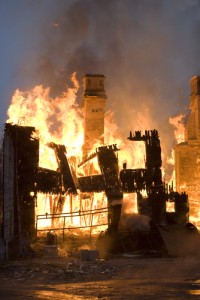 The case arose after Lewayne Greene moved into a retirement community, vacating her home in Irving, Texas and placing the structure on the market. She notified her insurer of the move, but she did not purchase an endorsement offered by the carrier, Farmers Insurance Exchange, that would covered an extended vacancy. Four months later, fire from a neighboring house spread to her home and damaged it. Farmers denied the subsequent insurance claim because the structure had been vacant for over sixty days, and the policyholder brought suit. She prevailed in the trial court, but the Court of Appeals reversed and rendered judgment for Farmers. On appeal, a unanimous Texas Supreme Court affirmed.
The policyholder sought to invoke Sec. 862.054 of the Texas Insurance Code, the anti-technicality statute. That provision recited that unless a breach or violation of “a warranty, condition, or provision of a fire insurance policy or contract of insurance on personal property . . . contributed to cause the destruction of the property,” the insurer could not raise it as “a defense to a suit for loss.” The parties had stipulated that the vacancy did not cause or contribute to the fire damage. The insured therefore argued that the statute precluded Farmers from denying the claim based upon the vacancy clause. Read more ›
 Plaintiff Hamilton Properties acquired the Dallas Plaza Hotel in 2006 and mothballed the structure in February of 2009. The hotel was insured by American Insurance Company (AIC) from February through September of 2009. In 2012, the policyholder notified AIC that it was making claim for roof and water damage allegedly sustained during a July 8, 2009 storm that dumped ping-pong sized hailstones on the city. After investigating the loss, the insured denied liability, and Hamilton Properties brought suit.
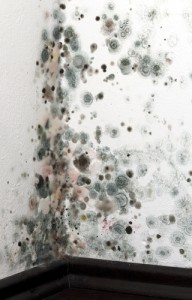 In July of 2007, the insured, Helena Murphy, reported damage to the roof of her house and interior water damage to her homeowner’s carrier, Patriot Insurance Company. The insurer promptly had the structure inspected by a claims adjuster, and it paid $3,553.05 for the loss. The policyholder then proceeded to make a series of additional claims over the course of the next few months, and Patriot ultimately tendered over $30,000 to Ms. Murphy, including the full policy limit of $10,000 for damage from mold and rot.
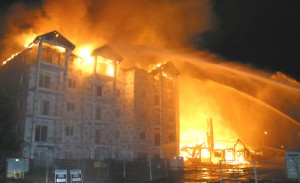 The insured, Caribbean Beach Club Association, owned a time-share condominium building in Fort Myers that was heavily damaged by fire in April 2003. It had property insurance coverage with Axis Surplus Insurance Company, and it had paid an additional premium for an Ordinance or Law Coverage Endorsement that provided up to $2.5 million for any increased cost of reconstruction incurred as a result of the enforcement of local ordinances or laws. The endorsement recited that the insured could not recover, however, until after the property was actually repaired or replaced and that reconstruction had to take place within two years’ time.
 The insured, Amish Connection, Inc., leased space in a mall in Waterloo, Iowa, and its merchandise was damaged after a 4” cast iron drain pipe above the ceiling burst during a rainstorm. The pipe carried water from the roof drains to a storm sewer. The policyholder reported the loss on the day after the storm, and its commercial property insurer, State Farm Fire & Casualty Company, denied by letter on the same afternoon, stating that the loss was “caused by rain.” The contract of insurance excluded loss “to the interior of any building or structure, or the property inside any building or structure, caused by rain, snow, sleet, ice, sand or dust, whether driven by wind or not[.]” Rain itself was not a defined term.
 The first decision was
  The policyholder owned a condominium building in Flint, Michigan that was heavily damaged by fire in November of 2010. The policy afforded coverage for ACV, which was defined in the contract of insurance to mean “replacement cost less a deduction that reflects depreciation, age, condition and obsolescence.” The insurance carrier, Cincinnati Insurance Company, determined that the value of the structure was $1,187,660.38, and it paid that amount to the insured. The policyholder contended that the building was actually worth $1.6 million more, however, and it demanded appraisal.
 The insureds, Peter and Susan Horvath, owned a home at the end of a cul-de-sac at the bottom of Bell Canyon Drive. On December 22, 2010, severe rainstorms led to what the husband described as a “river of water coming down the street.” The town’s drainage systems were overwhelmed, and the cul-de-sac quickly filled up, ultimately inundating the first floor of the insureds’ home with 18” of water. The couple were evacuated by firefighters, and the local municipality yellow-tagged the structure as unfit to live in.